
Sargassum in Key West: What Actually Happens Each Summer, and What It Means for Your Trip

Is There Sargassum in Key West Right Now? The Honest Answer
Key West gets sargassum every summer. Some summers it’s a few brown lines on the sand at low tide, and some summers the south-facing beaches get a heavy dose for a few weeks. That’s the whole range, and it’s been the range for longer than there has been a town here.
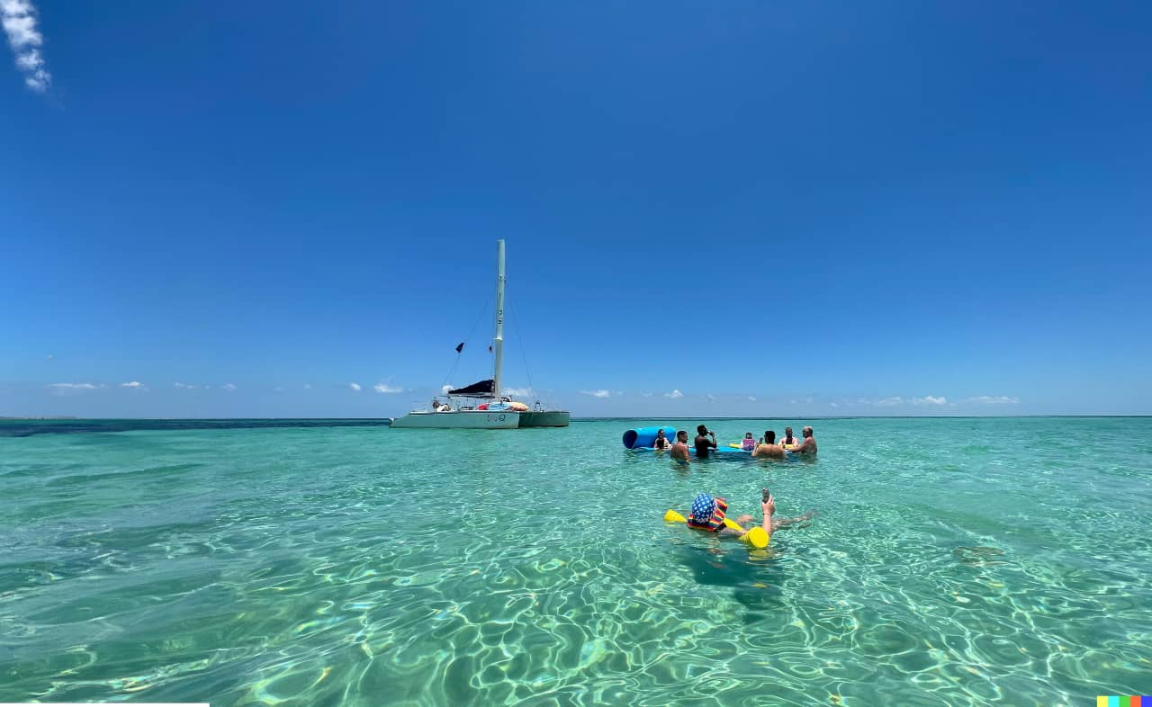
On a boat, it is not hard to avoid. That’s the part the headlines never get to. Floating patches drift by out in open water, they don’t stick to the reef, and our captain picks the spot with the best visibility on the morning of your trip, based on the wind and what the water looks like that day. We don’t book that decision in advance and we won’t promise you seaweed-free water, because the ocean doesn’t take instructions from us. What I can tell you is that heavier summers like 2026 caused no issues on our snorkeling or kayaking trips.
If you want a same-day read on the beaches, the Monroe County tourism office keeps a sargassum page for visitors. For everything else, keep reading.
When Is Sargassum Season in Key West?
Sargassum starts showing up along Florida’s Atlantic side in early spring, builds through May and June, and thins out through the fall. The University of South Florida’s Sargassum Watch System, which tracks the stuff by satellite, expects amounts to keep dropping each year until around November. Turtle nesting season runs May through October in our part of Florida, which matters later in this post, because it’s a big reason the beaches get raked the way they do.
What decides whether any one beach gets it is mostly wind. Key West usually sits in easterly winds, and the currents carry most of the sargassum past us offshore. When the wind swings around to the south for a stretch, it pushes the weed onto the beaches that face south. That’s why one beach can be clean while another one across the island is piled up, and why the same beach can be groomed in the morning and have a fresh line by dinner.
I think of it like weather. It has a range, and within that range it has a range. Sargassum has been floating around the Atlantic for a long time, and the Sargasso Sea is named after it. Some years you barely notice. Some years, like 2026, the beaches earn a few headlines.
Why the Headlines Sound Worse Than the Water: the 2026 Season as a Case Study
Every few years a spring forecast turns into a summer of “record” headlines, and the way 2026 played out is a good example of how those headlines and the water can tell two different stories at once.
What the Satellites Saw in 2026
The spring forecasts were genuinely alarming, and regionally they came true. In June, USF’s satellite counts showed the Caribbean at a record high for the month, and the Gulf hit about 5 million metric tons, nearly double its previous record. The USF lab said beaching events along Florida’s southeast coast were severe.
Then it turned. In their July 31 bulletin, the USF team reported that the total amount of sargassum “in every region started to decrease in July,” and called it “a good sign.” Because the peak month had passed, they concluded that 2026 “is set to be the second largest Sargassum year, only second to 2025.” By the end of August the amount inside the belt had been halved and the Gulf had dropped to a third of its July level.
So the season that was supposed to break the record finished second. That correction never got the coverage the spring forecast did, and a lot of people planning a fall or winter trip still have the spring headline in their head.
Why Key West Beaches Had a Heavy Early Summer in 2026
Here is the other half, because it’s also true. Key West’s beaches saw far more than usual in May and June.
The city contracts a company called Beach Raker to groom its public beaches, and in July its president, Chip Jones, briefed the city commission. May brought roughly 4,500 cubic yards of sargassum against a historical average of 1,631. June brought about 6,500 against an average of 2,031. “We’re tripling the averages of what we’re seeing,” he told them. The company used 57 contracted trucks across all of the previous year and put 120 to work in the two weeks before July 1. The driver was that unusual southerly wind.
Both of those things happened in the same summer. The Atlantic as a whole came in second to 2025, and Key West’s beaches had a rough six weeks. A visitor reads “record” and pictures the whole island buried. What actually happened is that the beaches got a heavy early summer while the water offshore was the same water it always is.
Late in August, at the Florida Keys National Marine Sanctuary’s operator meeting, NOAA staff told Keys operators that the Keys were on the downward trend of sargassum accumulation. We sit in those meetings as a Blue Star operator. A local sanctuary briefing and a national satellite lab were saying the same thing, which is about as calm and credible a note as you can get.
Why an Island Gives You Options a Beach Town Doesn’t
Most of the sargassum piles up on the south-facing beaches. If the beach we had in mind has a line of it, we choose a beach where it isn’t piled up, or we go out on a boat. Locals don’t dwell on it. It comes up in conversation about as often as the humidity does.
Out on the water it’s simpler still. Floating patches of sargassum are always around in summer. They drift by, they don’t get stuck on the reef, and they don’t get in the way of a reef snorkeling trip. Since we’re on an island, we have water access all the way around. A coastal beach town that faces one direction can’t do anything about a south wind. We can, because a south wind means we go north, or west, or out to the reef where the current keeps everything moving.
That’s the reason 2026 was a bit heavier on the south-facing beaches and a non-event on our trips, whether we’re snorkeling the reef or kayaking the mangroves. It is natural, it is always part of summer, and for us it is normal.
How Our Captains Find Clear Water on the Day
We get this question on the phone constantly in summer, and I’d rather answer it here than have you guess. One guest asked our reservationist, more or less word for word: “Is the water clear where you go out to the sandbars? There’s not much seaweed? I know it’s kind of seaweed time.” Another texted that they’d had a bad experience at the Dry Tortugas with seaweed and were thinking about moving their booking.
The answer our reservationists actually give is the true one: the captain picks the area with the best visibility on the day of the trip. The call is made on the water, from the conditions, after looking at the wind and the tide. It’s not a route we lock in a week ahead. Some days the best water is the reef, some days it’s a sandbar trip on the Gulf side, some days it’s the backcountry. That flexibility is the entire advantage of being on a small boat with a captain who’s out there every day, and it’s why the honest version of the answer is more reassuring than any promise would be.
Seaweed in Key West Is a Nursery, and a Dolphin’s Toy
Sargassum is a free-floating brown macroalgae. It never attaches to the bottom. It reproduces out at sea and drifts its entire life, which is unusual enough that the Sargasso Sea, the only sea on earth defined by currents instead of coastlines, is named after it.
What Lives in a Floating Sargassum Mat
A floating mat is a nursery. On a trip we’ll pull up a small piece and show guests what’s living in it: small shrimp, crabs, sometimes a seahorse. Once in a while, underneath a section, you’ll find a baby sea turtle. Hatchlings ride the mats for food and shelter, and NOAA describes the same thing: shrimp, crab, fish and turtles that have adapted specifically to living in floating sargassum. The Florida Fish and Wildlife Conservation Commission lists it as a primary nursery for mahi mahi, jacks and amberjacks.
That’s the frame that makes the rest of this make sense. While it floats, sargassum is very beneficial to marine life. That’s the sanctuary’s own phrasing to operators. It becomes a nuisance only once it washes ashore and starts to rot.
Our guides know this cold because they have to. Every deckhand and guide at Honest Eco sits an oral exam before they narrate anything to a guest. The algae section covers sargassum directly, alongside zooxanthellae, Neptune’s shaving brush and red tide. They have to explain what algae actually are, whether they’re plants, why they matter and to whom, and what the Sargasso Sea is. The same exam covers seagrass, which filters phosphates and nitrates out of the water and helps keep the algae blooms that wreck water clarity from getting started. Nobody on our boats is repeating a script they read the night before.
The Dolphin Game With Rules
This is the part I’d want you to remember. Dolphins play with natural toys, and sargassum is one of them.
The game goes like this. A dolphin picks up a piece of sargassum and drags it along on its fluke. The rule is that the dolphin carrying it has to be the one to drop it. Nobody steals it. Play is a huge part of how juvenile dolphins learn, and this is a game with etiquette. They learn the game, they learn the rules, and they get reprimanded when they break them. Other times a dolphin will grab a lump and swim it around on its rostrum, the way a dog carries a ball or a plush toy.
So the thing washing up in the headlines is, a mile offshore, a toy for a young dolphin, and a toy with manners attached. We watch it happen on our dolphin watch tour more summers than not. When I hear people describe sargassum as a disaster, that’s the image I can’t get out of my head.
What Happens When Sargassum Reaches Key West Beaches
The Morning Rake
The City of Key West contracts Beach Raker to groom its public beaches, usually in the morning, and haul the weed away. On a south-wind day it can build back up by afternoon, which is why the city rakes on a schedule rather than scraping beaches clean on demand.
There’s a second reason for the schedule. Turtle nesting season overlaps sargassum season almost exactly. Mechanical beach cleaning in Florida needs a permit from the Department of Environmental Protection, and during nesting season the permit requires a daily nest survey across the cleaning area before equipment rolls, along with limits on how deep the rake can dig and where it can go. So the beach gets walked for turtle crawls first. Then the trucks come.
Some of the city’s beaches are natural and left alone. Others are manicured, some with sand brought in, and those are the ones that get groomed. I think the city does well with it, and I have no reason to believe the right decisions aren’t being made for people and wildlife both. I’ve spent evenings on a groomed beach all through the past week of a heavy year and it was not bad at all.
Does Sargassum Smell? Only Once It Rots Ashore
Floating sargassum doesn’t smell like much. Sargassum that has been sitting on a beach for a day or two does. As it decomposes it gives off hydrogen sulfide, the rotten-egg gas. The Florida Department of Health says it can irritate the eyes, nose and throat, and that people with asthma or other breathing conditions may be more sensitive to it. Their advice is to limit your exposure, avoid handling the rotting piles, and don’t swim through thick mats. The tiny animals living in the weed can irritate skin on direct contact.
That’s the same point NOAA made to operators at the sanctuary meeting: fine while it floats, be careful around it once it’s decomposing on shore. That’s the whole health note.
Who Is Allowed to Remove It
Locals aren’t supposed to touch it on the beach, and when it blows in, the volume is too large for anyone with a rake anyway. Mechanized cleaning needs a state permit, so private citizens don’t clean public beaches. At the August sanctuary meeting, NOAA staff told operators that sargassum can’t be removed from the shoreline without a permit, but that it can be removed from channels by the private citizens who live along them.
The state’s rules for canals are on the FWC’s sargassum page. A resident can pull up to 100 pounds out of a canal or nearshore water with a recreational fishing license, and more than that needs a commercial saltwater products license. When Monroe County put out its guidance in June, it made the point that clearing a canal “may provide temporary relief, but it is not a long-term solution,” because the next batch replaces it. County crews handled county beaches like Harry Harris Park with clamshell trucks.
Part of why removal is regulated at all is that the wrack line is food. Shorebirds and crabs work it constantly. A beach with nothing on it looks tidy and feeds nobody.
Key West Sargassum Questions Guests Ask Us Before They Book
Will sargassum ruin snorkeling or the sandbar?
In our experience, no. It drifts in open water and doesn’t settle on the reef. The captain picks the spot with the best visibility that morning, which some days is the reef and some days is one of the Key West sandbars or the backcountry. Heavier summers have not interfered with our snorkeling or kayaking trips.
Is it safe to swim near Sargassum?
Floating sargassum is harmless to swim around, though the small animals in it can irritate skin if you grab a handful. Thick, rotting mats at the shoreline are the thing to avoid, mostly because of the hydrogen sulfide smell. Give those a wide berth and you’re fine.
Which Key West beaches get groomed?
The city’s manicured public beaches are raked, usually in the morning. The south-facing beaches are the ones that collect sargassum on a south wind. Natural beaches are left as they are. If the beach you had in mind has a line of weed, the local move is to pick a different one that day, and there are several spots around the island where you can snorkel from shore.
Do you guarantee seaweed-free water?
No, and be wary of anyone who does. Conditions change with the wind every day. What we do is make the call on the water, on the morning of your trip, and choose the clearest water we can reach. That has worked through every heavy year we’ve been operating.
Where do I check today’s conditions?
The Monroe County tourism office keeps a sargassum page for visitors, and the USF Sargassum Watch System publishes a monthly outlook for the region. Or call us. Our reservationists talk to the captains every morning and will tell you what the water looked like today.
If you’re planning a summer trip and the seaweed news has you nervous, come out on one of our Key West eco boat tours. We’ll show you what’s living in it, and if we’re lucky, a young dolphin will show you what it’s for.
Recent Posts
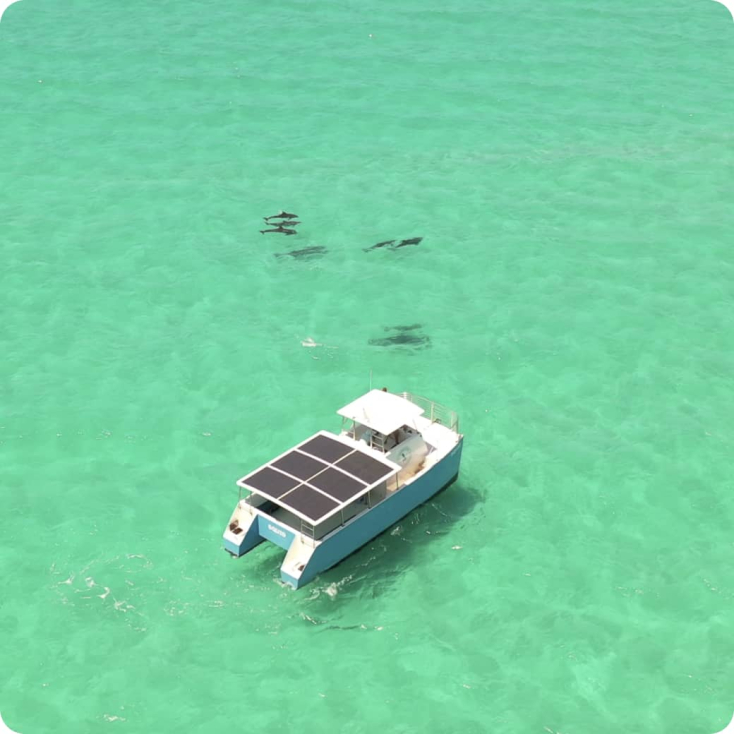
The Dolphin Playground: Key West’s Wild Dolphin Gathering Spot
The Dolphin Playground is where Key West’s wild dolphins rest, hunt, and play. A biologist explains why they gather there — and how to visit responsibly.
Key West in July: Weather, Events, and the Best Things to Do
Visiting Key West in July? An honest local guide to the weather, the 4th of July, festivals, and the best things to do on and off the water.
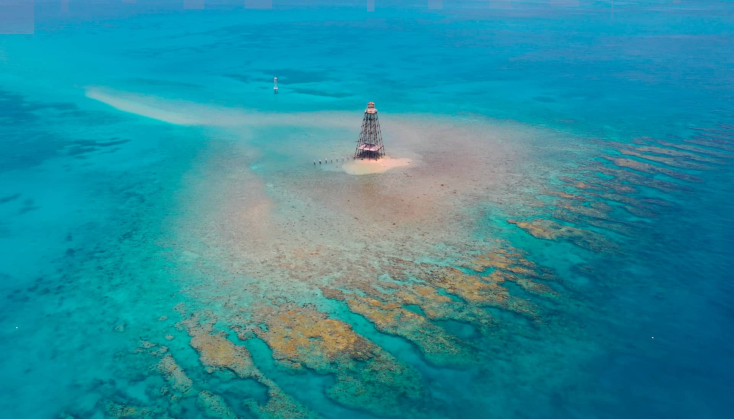
Things to Do on the Way to Key West: The Best Stops Along the Overseas Highway
Driving to Key West? Here are the best stops along the Overseas Highway — from John Pennekamp to Bahia Honda — by a Key West eco-tour crew.
Snorkeling in Key West From Shore: A Local Guide to the Best Snorkeling Beach Spots
A local guide to the best beach snorkeling in Key West and the Florida Keys — where to go, when to go, and what you’ll actually see underwater.
Best Time and Places to See Dolphins in Key West
Wondering where to see dolphins in Key West and the best time to spot them? Local, family-friendly tips on seasons, timing, and best places.
Florida Dolphin Species: Types of Dolphins You’ll See in Key West, Florida
The most common types of dolphins in Florida, which species you may see in Key West and the Florida Keys, where they live, and the truth about pink dolphins.
View Our Honest Eco Tours
Dolphin Watch + Guided Snorkel & Sandbar
The Original Dolphin Watch and Snorkel, since 1986! Offered year-round.
Dolphin Watch + Guided Snorkel & Sandbar
The original Key West Dolphin Watch and Snorkel, since 1986! Offered year-round.
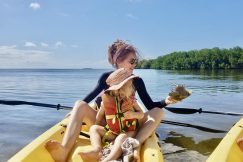
Kayak tour + Guided Snorkel & Morning Sail
Kayak tour of the mangroves, plus a Guided Snorkel
Kayak tour + Guided Snorkel & Morning Sail
Kayak tour of the mangroves, plus a Guided Snorkel
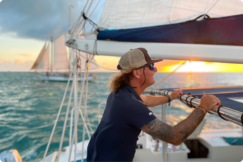
Dolphin Watch + Sunset Catamaran Sail
Our most mellow tour. Search for dolphins under a setting sun. This tour does not feature snorkeling. Offered Nov - Apr.

Sandbar Charter + Private Snorkeling
Perfect for small friend groups and families. Book a Private charter aboard our 6 passenger maximum boat Cowfish.

Private Charters: Choose your own Adventure!
Prices vary by tour, boat and group size. Book online or customize.

All The Above
Private group Tour: Kayak tour of the mangroves, guided snorkel, sail, enjoy an organic lunch and search for dolphins

Sunset Catamaran Sail + Reef Snorkel & Sandbar
This Reef Snorkel and Sandbar visit takes advantage of the warm calm weather.